Tartaczna 2


 back
back
Copper Coil (IUD) Gdańsk – Hormone-Free Contraception
Copper IUD consultations, fitting, replacement and removal
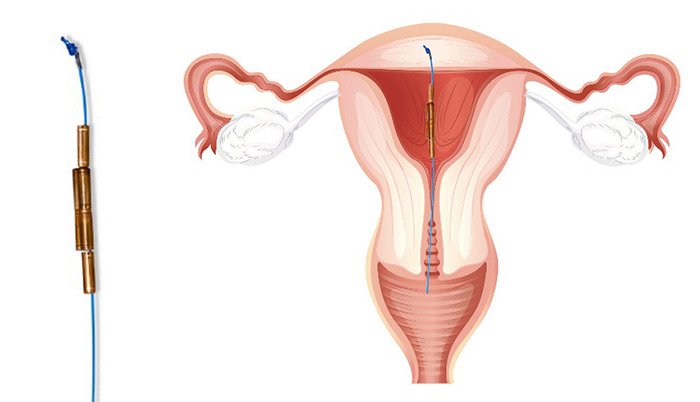
A copper intrauterine device (IUD), commonly called a copper coil, is a long-acting, hormone-free contraceptive. It sits inside the uterus and provides reversible protection against pregnancy without the need to take a daily pill.
At Tartaczna 2 Medical Centre in Gdańsk, Dr Marek Korożan, Dr Dominika Kozikowska and Dr Volha Khitrun provide copper coil consultations, fitting, replacement and removal.
How does the copper coil work?
The device releases copper ions, which affect sperm movement and function, making fertilisation less likely. It contains neither oestrogen nor a progestogen and does not work by suppressing ovulation.
Models differ in their design, dimensions and copper surface area. Your doctor will recommend a device based on your uterine anatomy, menstrual bleeding pattern and preferences.

How effective is the copper coil, and how long does it last?
Copper IUDs are more than 99% effective during the first year of use. Protection does not depend on remembering a daily dose, but correct positioning and timely replacement are important.
The duration of use depends on the model and the manufacturer’s instructions — often between 5 and 10 years. For example, the T-Safe 380A QL is intended for use for up to 10 years. However, not every copper coil has the same replacement interval.
After fitting, keep the documentation showing the device’s name, insertion date and removal or replacement deadline.
Who may benefit from hormone-free contraception?
A copper coil may be an option if you:
- want long-term, reversible contraception,
- prefer not to use hormones or cannot use certain hormonal methods,
- find it difficult to take contraceptive pills consistently,
- want the option of trying for a pregnancy soon after removal.
Copper coils can also be used by women who have not given birth, following assessment of their anatomy and any contraindications.
Because it contains no hormones, a copper IUD may also be suitable for women with breast cancer or a history of breast cancer treatment. The choice still requires consideration of their overall health and ongoing treatment.
How does a copper coil affect periods?
The device does not suppress the ovaries’ natural hormonal activity, but it can affect bleeding. Periods may become heavier, longer or more painful, particularly during the first few months. Spotting between periods can also occur.
Symptoms improve over time for some women, but this cannot be guaranteed after two or three cycles. If you already have heavy periods, iron deficiency or anaemia, discuss whether another contraceptive method would be more suitable.
When is a copper coil unsuitable?
Insertion is contraindicated or requires further assessment beforehand in situations including:
- pregnancy or an inability to reliably exclude pregnancy,
- active pelvic inflammatory disease, purulent cervicitis or untreated chlamydia or gonorrhoea,
- unexplained vaginal bleeding that raises suspicion of a serious condition,
- abnormalities that distort the uterine cavity and prevent correct placement,
- untreated cervical or endometrial cancer.
The manufacturer’s contraindications for the specific device must also be considered, including an allergy to its components. Your gynaecologist will assess whether the method is suitable for you.
How to prepare for copper coil fitting
During your consultation, the doctor will review your medical history and perform a gynaecological examination. Depending on your circumstances, they may also assess the uterus with a transvaginal ultrasound scan. Infection testing is guided by symptoms and risk factors.
Tell the doctor when your last period started, which contraception you use, whether you have had unprotected sex, and about any medical conditions or medicines. A negative pregnancy test taken shortly after sex may not be enough to exclude pregnancy.
What happens during copper coil fitting, and does it hurt?
The doctor inserts a speculum into the vagina to see the cervix. They then assess the position and depth of the uterine cavity and pass the device through the cervix using a thin applicator. Threads remain in the vagina so that the device can be removed later.
Insertion itself usually takes a few minutes. It can cause cramping, discomfort or pain of varying intensity. Discuss pain relief options, including local anaesthesia, before the procedure.
After a short observation period, you can usually go home. Mild lower abdominal cramps and spotting may continue for a few days.
When does the copper coil start working?
A copper IUD provides contraceptive protection immediately after correct insertion. You do not need to wait seven days for it to start working.
It can be fitted at different points in the menstrual cycle if the doctor can reliably exclude pregnancy. You do not have to be on your period. Your doctor will provide advice about resuming sex after insertion.
Copper coils after childbirth and while breastfeeding
A copper coil contains no hormones and can be used while breastfeeding. The timing of insertion depends on the device, the circumstances of the birth and how far the uterus has returned to its pre-pregnancy state.
At our centre, we plan postnatal coil fitting from 10 weeks after childbirth, following gynaecological assessment. This is our clinic’s approach to scheduling the procedure, rather than a universal rule for every device and clinical situation.
Breastfeeding and recent childbirth increase the risk of uterine perforation during insertion, although the risk remains low. Your doctor will take these factors into account during the consultation.
Follow-up and symptoms to watch for after fitting
Follow-up arrangements depend on the device and your individual care plan. Contact a doctor sooner if you develop severe or increasing pain, fever, unusual discharge, very heavy bleeding or suspect that the coil has come out.
If the threads suddenly change length, you can no longer feel them or you can feel a hard part of the device, do not try to adjust it yourself. Use condoms or avoid sex until its position has been checked. Tell the doctor if you have already had sex without additional protection.
A positive pregnancy test requires prompt medical assessment. Severe one-sided lower abdominal pain, dizziness or fainting requires urgent medical attention.
Copper coil removal and replacement
A gynaecologist usually removes the device by gently pulling on its removal threads. These are not copper wires, and you should not pull on them yourself. If the threads are not visible or removal is difficult, further assessment or a different removal technique may be needed.
The coil must be removed or replaced by the deadline specified for that model. It can also be removed earlier at your request.
Fertility returns quickly after removal. If you do not want to become pregnant, arrange ongoing contraception before the procedure. Use condoms or avoid sex during the 7 days before planned removal, unless your doctor has agreed another way to maintain contraceptive protection.
Does a copper coil protect against infections?
No. A copper IUD does not protect against sexually transmitted infections. Condoms help reduce the risk of transmission.
Copper coil fitting in Gdańsk – cost and appointments
Visit Tartaczna 2 Medical Centre at 2 Tartaczna Street in Gdańsk’s Śródmieście district. Dr Marek Korożan, Dr Dominika Kozikowska and Dr Volha Khitrun provide consultations, copper coil fitting, replacement and removal.
When booking, please specify which type of appointment you need. The price depends on the device and the services included. Our reception team will explain whether the quoted cost covers the coil, consultation and insertion.
Book using the appointment calendar below or contact our reception team: +48 58 719 10 25, kontakt@tartaczna2.pl.

Hormonal Coil (IUD) in Gdańsk – Fitting and Replacement