Tartaczna 2


 back
back
HPV Testing in Gdańsk - Symptoms, Diagnosis and Results
HPV Testing
Human papillomavirus (HPV) can affect both women and men. Infection often causes no symptoms, and a positive HPV test does not mean that you have cancer. At Tartaczna 2 Medical Centre in Gdańsk, we offer HPV testing and consultations to help you understand your results and plan any further investigations.
What is HPV?
HPV is a group of viruses that infect the skin and mucous membranes. Different types have different effects:
- Low-risk types, particularly HPV 6 and 11 – cause most genital warts.
- High-risk types, including HPV 16 and 18 – persistent infection can lead to precancerous changes and cancer, particularly cervical cancer.
Most infections clear or become undetectable as the immune system controls the virus. Persistent infection with high-risk HPV requires appropriate follow-up.
How is HPV transmitted?
HPV is mainly transmitted through sexual contact, including intimate skin-to-skin contact without penetration. Condoms reduce the risk of transmission but do not provide complete protection.
A positive test cannot establish when the infection occurred or who transmitted it. An HPV diagnosis is not evidence of infidelity.
HPV symptoms – when should you see a doctor?
HPV infection frequently causes no symptoms. Some types cause warts around the genitals or anus. Precancerous changes in the cervix may also develop without symptoms, which is why cervical screening is important.
Seek medical advice if you notice new genital lesions, bleeding after sex, bleeding between periods or unusual vaginal discharge. These symptoms have several possible causes and do not necessarily indicate HPV infection or cancer.
HPV, cervical dysplasia and cervical cancer
Persistent infection with high-risk HPV is the main cause of cervical cancer. HPV is also associated with cancers of the vulva, vagina, anus and penis, and some cancers of the throat.
Cervical dysplasia means abnormal changes in the cells lining the cervix. Not all changes progress to cancer. Your test results help determine whether you need monitoring, further investigations or treatment.

HPV testing in Gdańsk – how does it differ from cervical cytology?
HPV testing and cervical cytology provide different information:
- A high-risk HPV test detects genetic material from the virus. Depending on the test, it may also identify individual HPV types.
- Liquid-based cytology (LBC), also known as a cervical smear test, examines cervical cells for abnormalities.
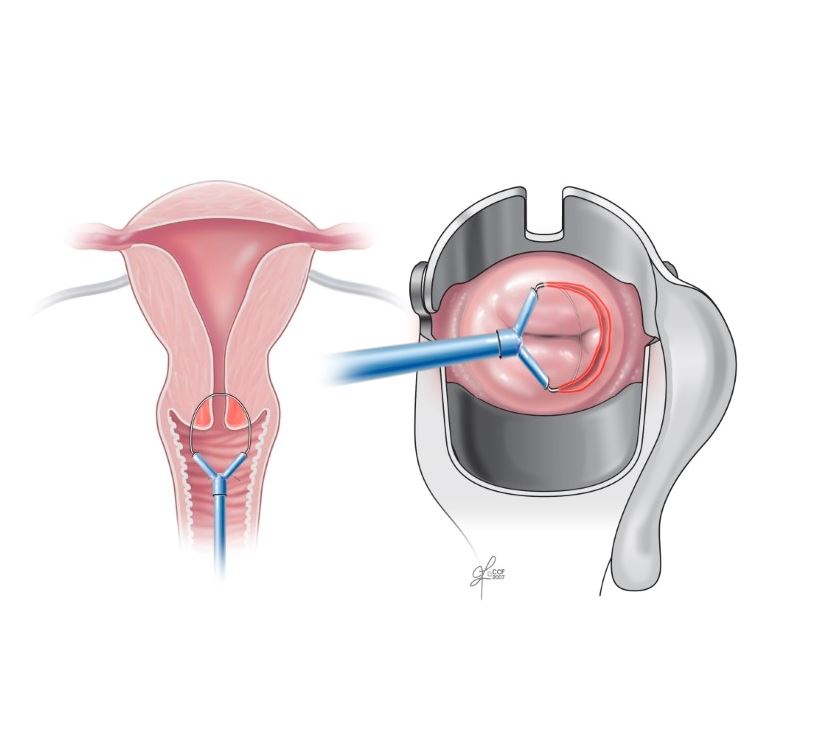
- Colposcopy and, when indicated, a biopsy provide further assessment when screening results or the appearance of the cervix require investigation.
Your doctor recommends the appropriate tests and follow-up interval based on your age, previous results and individual risk factors.
Understanding cervical cytology results – the Bethesda System
The Bethesda System provides standard terminology for reporting cervical cytology. The table below is a simplified guide to the main result categories, not a complete laboratory reporting template.
| Result | Meaning |
|---|---|
| NILM | Negative for intraepithelial lesion or malignancy. No precancerous or malignant cells are identified. |
| ASC-US | Atypical squamous cells of undetermined significance. Some cells look abnormal, but the changes are insufficient for a diagnosis of a squamous intraepithelial lesion. |
| ASC-H | Atypical squamous cells in which a high-grade squamous intraepithelial lesion cannot be excluded. |
| LSIL | Low-grade squamous intraepithelial lesion. Low-grade cellular changes, usually associated with HPV infection. |
| HSIL | High-grade squamous intraepithelial lesion. More significant cellular abnormalities requiring further assessment. |
| Squamous cell carcinoma | Cytological findings indicating squamous cell carcinoma, requiring urgent specialist investigation and tissue confirmation. |
| AGC | Atypical glandular cells. The report further specifies the cell type and, where appropriate, whether the findings favour neoplasia. |
| AIS | Endocervical adenocarcinoma in situ – a pre-invasive glandular lesion. |
| Adenocarcinoma | Cytological findings indicating glandular cancer, requiring urgent specialist investigation. |
Cytology results are not the same as a tissue diagnosis. CIN grading is established through histological assessment of tissue. The report also states whether the sample is suitable for evaluation. An inadequate sample may need to be repeated.
A normal cytology result does not exclude HPV infection. Your doctor interprets cytology alongside HPV testing and your previous medical history.
A positive HPV test – what happens next?
A positive HPV result does not mean cancer and does not always require immediate colposcopy. Further assessment depends on the HPV type, cytology findings and previous screening history. HPV 16 or 18 requires particular attention and may warrant colposcopy even when cytology is normal.
At Tartaczna 2 Medical Centre, samples for an HPV-only test are collected into a different medium from that used for LBC. If you choose HPV testing alone and the result is positive, you will need another appointment for an LBC sample to be collected. We cannot automatically perform LBC using the sample collected for an HPV-only test.
Please bring your HPV result, previous cervical cytology results and any reports from colposcopy or cervical treatment to your consultation.

HPV in men – is testing recommended?
HPV also affects men, but routine HPV testing is not recommended for all men without symptoms or solely because a female partner has tested positive. Genital warts or other concerning lesions should be assessed by a doctor, who can recommend investigations appropriate to their location and appearance.
Can HPV infection be treated?
There is no treatment that reliably eliminates HPV from the body. However, conditions caused by HPV, including genital warts and precancerous changes, can be treated. Attending recommended follow-up appointments remains important, even if you have no symptoms.
HPV vaccination – where can you find more information?
Vaccination helps prevent new infections with the HPV types covered by the vaccine but does not treat an existing infection. A negative HPV test is not required before vaccination. Read more on our page about HPV vaccination in Gdańsk.
You can book a vaccination assessment and vaccination directly with nurse Edyta Mechlińska, who has completed specialist training in immunisation. Our doctors, including gynaecologists, oncologists and surgical oncologists, also carry out pre-vaccination assessments.
HPV testing and gynaecology consultations in Gdańsk
Would you like an HPV test or advice about a positive result? Visit Tartaczna 2 Medical Centre at 2 Tartaczna Street in Gdańsk city centre, in the Śródmieście district. Gynaecology consultations are available with Dr Marek Korożan, Dr Dominika Kozikowska and Dr Volha Khitrun.
Book through our reception team: +48 58 719 10 25, kontakt@tartaczna2.pl.