Tartaczna 2


 back
back
Spirometry
Lung function testing for adults and young people aged 16 and over
Spirometry is a lung function test that measures the volume and speed of air you breathe out. It helps assess airflow through the airways, identify airflow obstruction and monitor the treatment of lung conditions.
At Tartaczna 2 Medical Centre in Gdańsk, we perform spirometry for adults and young people aged 16 and over.
When is spirometry recommended?
Your doctor may recommend the test:
- for persistent cough, breathlessness, wheezing or reduced exercise tolerance,
- when investigating asthma or chronic obstructive pulmonary disease, known as COPD,
- to monitor a diagnosed respiratory condition and response to treatment,
- when symptoms occur alongside exposure to tobacco smoke, dust or irritants,
- in selected cases before surgery or as part of a fitness-for-work assessment.
Spirometry does not replace a medical examination or imaging when these are needed. It is not a test for detecting lung cancer.
How to prepare for spirometry
- Avoid smoking and vaping before the test; our centre advises a break of at least 4 hours.
- Do not drink alcohol for at least 8 hours beforehand.
- Avoid a large meal for 2 hours before the test. Fasting is not usually necessary.
- Avoid strenuous exercise for at least 30 minutes beforehand.
- Wear comfortable clothing that does not restrict your chest or abdomen.
- Bring previous results and a list of medicines, including inhalers.
Do not stop inhaled medicines on your own. Whether particular doses need to be withheld depends on the purpose of the test and your doctor's instructions. Testing the effect of treatment may involve taking your usual medicines; diagnostic testing may require an agreed break. Check your preparation instructions before coming to the centre.
What happens during a spirometry test?
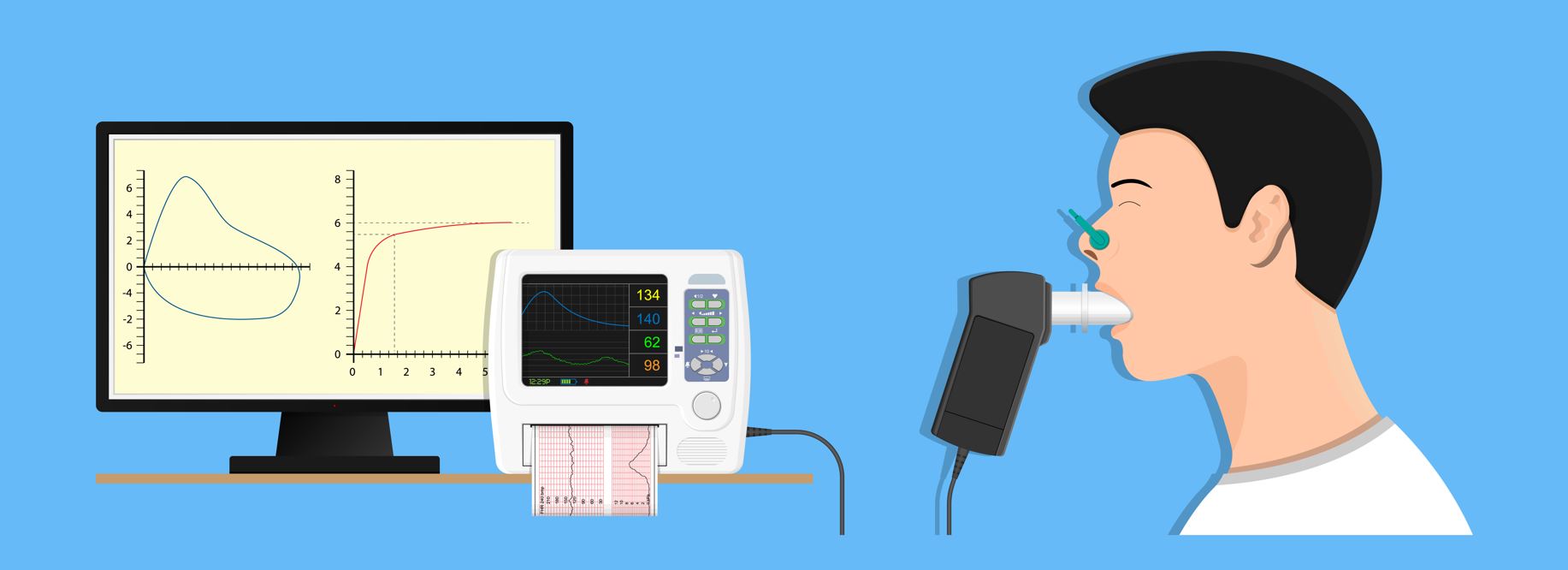
The test is usually performed sitting down, with a clip on your nose. You seal your lips around a mouthpiece, take the deepest possible breath and blow out as quickly and forcefully as you can, following the operator's instructions.
The manoeuvre is repeated, usually at least three times, to obtain good-quality, repeatable measurements. You can rest between attempts. The test requires cooperation, and the staff will explain each step and help you perform it correctly.
Baseline spirometry and bronchodilator testing
When indicated, measurements can be repeated after an inhaled medicine that opens the airways. Comparing the results before and after the medicine helps assess the airway response. This is described separately on our page about bronchodilator reversibility testing.
When might spirometry need to be postponed?
Before testing, report any current respiratory infection, coughing up blood, recent heart attack or stroke, pneumothorax, unstable heart condition, uncontrolled high blood pressure or recent surgery, particularly involving the eyes, chest or abdomen. The doctor will assess whether forceful breathing manoeuvres are appropriate in your situation.
Coughing, tiredness or dizziness may occur during the test. Tell the staff immediately if you develop pain, marked breathlessness or feel faint.
What do spirometry results mean?
The report includes FEV1, the volume of air you blow out in the first second, and FVC, the forced vital capacity. The doctor also assesses their ratio, the quality of the attempts and comparison with reference values appropriate for you.
A normal result does not exclude every lung condition, including asthma. A reduced FVC alone does not confirm restriction; further lung function tests may be needed. Results are always interpreted alongside symptoms and previous investigations.
Spirometry in Gdańsk – arranging your test
Spirometry is available without advance booking during designated treatment-room hours. Before travelling, check current availability and preparation instructions, particularly if you need bronchodilator testing. Respiratory medicine consultations and discussion of results are provided by Dr Sylwia Agata Trześniowska; a doctor's appointment needs to be booked separately.
Book through our reception team: +48 58 719 10 25, kontakt@tartaczna2.pl.