
Tartaczna 2


 back
back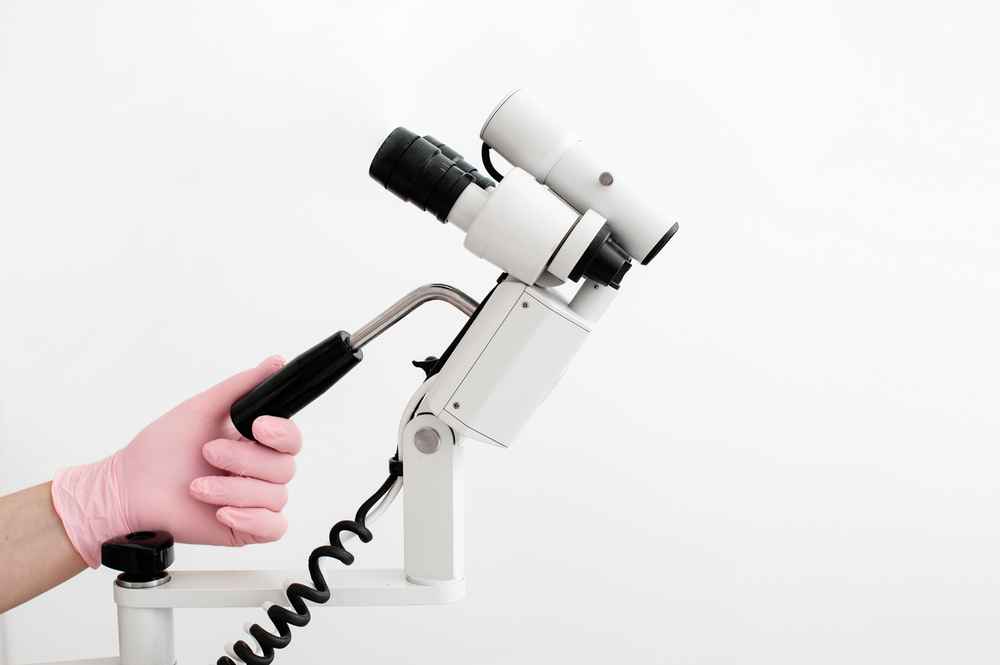
Colposcopy Gdańsk – Cervical Examination
Colposcopy
Colposcopy in Gdańsk is an examination that allows the cervix, vagina and vulva to be assessed under magnification. At Tartaczna 2 Medical Centre, we perform colposcopy following an abnormal liquid-based cytology result, a positive high-risk HPV test or when a cervical abnormality is suspected.
Colposcopy helps the doctor determine whether a biopsy is required for histopathological examination. However, the colposcopic appearance alone does not provide a definitive diagnosis of a precancerous lesion or cervical cancer. If a suspicious area is identified, the diagnosis is established on the basis of histopathology.
What is a colposcopy?
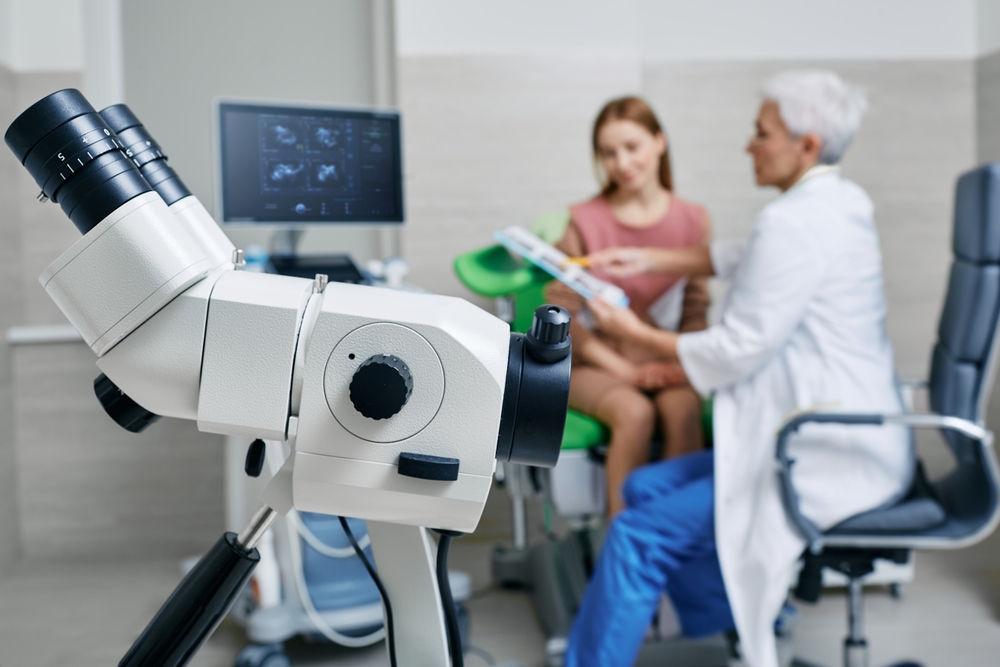
Colposcopy involves examining the cervix and, where necessary, the vagina and vulva using a colposcope. A colposcope is an optical instrument that provides appropriate illumination and magnification of the examined area.
The colposcope remains outside the patient’s body. A speculum is inserted into the vagina, in the same way as during cervical screening. The doctor assesses the appearance of the epithelium, the transformation zone, the squamocolumnar junction and the pattern of blood vessels.
What does an abnormal cervical cytology result mean?
An abnormal cytology result means that cells requiring further assessment have been identified in the collected sample. It does not necessarily mean that the patient has cervical cancer.
Cellular abnormalities may be associated with a high-risk HPV infection. Further management depends on the cytology category, the high-risk HPV result, the HPV genotype, previous screening results and the patient’s individual risk.
Abnormal cervical cytology categories in the Bethesda System include:
- ASC-US – atypical squamous cells of undetermined significance,
- LSIL – low-grade squamous intraepithelial lesion,
- ASC-H – atypical squamous cells where a high-grade lesion cannot be excluded,
- HSIL – high-grade squamous intraepithelial lesion,
- AGC – atypical glandular cells,
- AIS – adenocarcinoma in situ,
- SCC – squamous cell carcinoma.
These categories do not all require the same management. For example, an ASC-US or LSIL result does not always require immediate colposcopy. The high-risk HPV result and previous screening history must also be considered.
High-risk HPV and referral for colposcopy
A positive high-risk HPV result does not mean cervical cancer and does not always lead directly to colposcopy. According to the recommendations of the Polish Society of Gynaecologists and Obstetricians, every patient with a positive high-risk HPV result should also undergo liquid-based cytology. Further management depends partly on the detected HPV genotype.
- Positive HPV 16 or HPV 18 – colposcopy may be indicated even when the liquid-based cytology result is normal, meaning NILM.
- Another high-risk HPV type with a normal LBC result – repeating the high-risk HPV test after 12 months is usually recommended.
- Positive high-risk HPV with ASC-US or a more abnormal cytology result – the patient is referred for further assessment, which may include colposcopy and cervical biopsies.
- Persistent high-risk HPV infection – colposcopy may be indicated depending on previous results and how long the infection has persisted.
The exact follow-up pathway is determined by a doctor on the basis of all available results rather than a single test result.
Important information about tests performed at Tartaczna 2: if a patient has only a high-risk HPV test at our clinic, the sample is collected using a transport medium other than SurePath. Following a positive result, another appointment and a new sample collection for liquid-based cytology are required.
More information is available on our page about HPV infection and high-risk HPV testing.
When is a colposcopy recommended?
Colposcopy may be recommended in particular in the following situations:
- an abnormal cervical cytology result that requires further diagnostic assessment under the applicable clinical pathway,
- a positive HPV 16 or HPV 18 result, including when liquid-based cytology is normal,
- a positive high-risk HPV test combined with an abnormal cytology result,
- a persistent high-risk HPV infection,
- a visible suspicious lesion of the cervix, vagina or vulva,
- bleeding after sexual intercourse, bleeding between periods or postmenopausal bleeding requiring assessment of the cervix,
- discrepancy between cervical cytology, HPV testing and the clinical findings,
- follow-up after the diagnosis or treatment of cervical intraepithelial lesions,
- clinical suspicion of cervical cancer, regardless of age or previous cervical screening results,
- an abnormal screening result during pregnancy when further assessment is considered necessary.
Genital warts, recurrent vaginal infections, inflammation or an abnormality detected by ultrasound do not automatically constitute an indication for colposcopy. The decision depends on the clinical findings and cervical screening results.

Is colposcopy performed as a routine preventive examination?
Colposcopy is not a primary cervical screening test and does not replace regular high-risk HPV testing or liquid-based cytology. Routine colposcopy is generally not required in patients without symptoms who have normal screening results.
The examination is primarily performed when there is a specific indication arising from HPV testing, cervical cytology, previous medical history, symptoms or an abnormal appearance of the cervix.
What happens during a colposcopy?
The patient lies on a gynaecological examination chair. The doctor inserts a speculum into the vagina, visualises the cervix and examines it using a colposcope, which remains outside the body.
A dilute acetic acid solution is applied to the cervix to help reveal abnormal areas of the epithelium. In selected cases, Lugol’s iodine solution is also applied.
During the examination, the doctor assesses:
- the type and visibility of the transformation zone,
- the reaction of the epithelium to acetic acid and Lugol’s iodine,
- the borders of any identified lesion,
- the presence of abnormal blood vessels, punctation or mosaic patterns,
- whether cervical biopsies are required.
The examination itself usually takes approximately 10–20 minutes. The appointment may take longer if tissue samples need to be collected for histopathological examination.
Are biopsies taken during every colposcopy?
A biopsy is not required during every colposcopy. The decision is made by the doctor on the basis of the colposcopic appearance, the location of the lesion, HPV and cytology results and the patient’s previous medical history.
If a suspicious area is identified, the doctor may take one or more small cervical biopsies. The samples are sent for histopathological examination, which can confirm or exclude an intraepithelial lesion and determine its grade.
In certain cases, assessment of the cervical canal may also be required. The colposcopist determines the appropriate extent of the examination for each patient.

Colposcopy during pregnancy
Colposcopy can be performed during pregnancy when clinically indicated. Pregnancy itself does not change the thresholds for referral to colposcopy, but subsequent diagnostic and treatment procedures differ from those used for patients who are not pregnant.
According to the recommendations of the Polish Society of Gynaecologists and Obstetricians, endocervical curettage and endometrial biopsy must not be performed during pregnancy. A biopsy of a visible cervical lesion may be taken if it is required to exclude invasive disease.
Histologically confirmed HSIL/CIN 2 or CIN 3 lesions are usually monitored during pregnancy with cytology and colposcopy at intervals determined by the doctor. The recommendations allow surveillance every 12–24 weeks or, in selected circumstances, postponement of reassessment until at least four weeks after delivery.
Treatment of precancerous lesions is generally postponed until after delivery unless invasive cervical cancer is suspected.
How should I prepare for a colposcopy?
Please bring current and previous cervical cytology, HPV, histopathology and colposcopy results to your appointment. These results help the doctor assess your risk correctly and plan the appropriate extent of the examination.
Before a colposcopy, it is advisable to:
- avoid sexual intercourse for approximately 24–48 hours,
- avoid vaginal medicines, pessaries, creams and other vaginal products for approximately 48 hours, unless advised otherwise by your doctor,
- avoid vaginal douching,
- avoid using a tampon immediately before the examination,
- tell the doctor if you are pregnant, take anticoagulant medication or have an allergy to iodine or other preparations.
What is the best time in the menstrual cycle for a colposcopy?
A colposcopy does not have to be performed on a specific day of the menstrual cycle. It is best to arrange the examination when you are not experiencing heavy menstrual bleeding, as blood may make accurate assessment of the cervix more difficult.
There is no requirement to undergo colposcopy only between days 10 and 20 of the menstrual cycle. If there is an urgent indication, the date of the examination is determined by the doctor regardless of the phase of the cycle.
Is a colposcopy painful?
Viewing the cervix through a colposcope should not itself cause pain. Some discomfort may be associated with insertion of the speculum or application of the acetic acid solution.
A cervical biopsy may cause a brief pinching sensation, discomfort similar to a menstrual cramp or minor bleeding. Individual experiences vary.
Light spotting or dark vaginal discharge may occur after a biopsy, particularly if a preparation has been used to control bleeding. The doctor will provide instructions regarding sexual intercourse, tampons, bathing and physical activity following the procedure.
What can a colposcopy detect?
Colposcopy helps identify areas of abnormal epithelium that require further assessment and allows the doctor to select the most appropriate site for a biopsy. The examination may reveal changes suggestive of:
- low-grade or high-grade intraepithelial lesions,
- glandular abnormalities,
- suspected invasive cervical cancer,
- abnormalities of the vaginal or vulval epithelium,
- polyps, inflammatory, atrophic or traumatic changes.
Colposcopy can indicate the possible nature of a lesion, but a definitive diagnosis of CIN, AIS or cervical cancer is based on histopathological examination of collected tissue.
Does a normal colposcopy result complete the diagnostic process?
A normal colposcopic appearance does not always mean that no further assessment is required. The colposcopy result must be considered alongside the cervical cytology result, high-risk HPV result and previous screening history.
Further investigation may be required particularly when:
- the transformation zone is not fully visible,
- the cytology result indicates a high-grade lesion,
- a high-risk HPV infection persists,
- there is a discrepancy between the results of different examinations,
- the patient has concerning symptoms or a visible cervical lesion.
In these circumstances, the doctor may recommend repeat high-risk HPV testing, liquid-based cytology, another colposcopy, cervical biopsies or a different diagnostic procedure.

Colposcopy in Gdańsk – how can I book an examination?
Colposcopy is available at Tartaczna 2 Medical Centre, located at Tartaczna 2/1a in central Gdańsk. Appointments are available with Dr Volha (Olga) Khitrun and Dr Dominika Kozikowska.
To arrange an examination, please call +48 58 719 10 25, email kontakt@tartaczna2.pl or visit our contact page.
Doctor profiles: Dr Volha Khitrun, Dr Dominika Kozikowska.
Book using the appointment calendar below or contact our reception team: +48 58 719 10 25, kontakt@tartaczna2.pl.
You can also read about liquid-based cytology, high-risk HPV testing and our gynaecology clinic in Gdańsk.

Liquid-Based Cytology (LBC) and HPV Test Gdańsk

HPV Testing in Gdańsk - Symptoms, Diagnosis and Results
