
Tartaczna 2


 back
back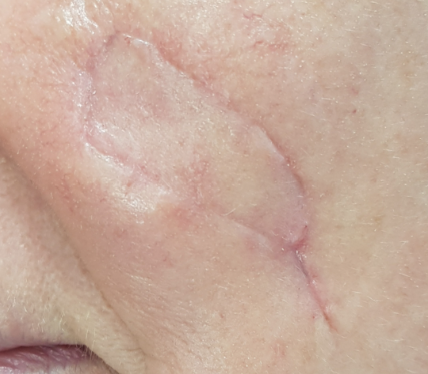
Facial Skin Lesion Removal with a Skin Graft Gdańsk
Facial Skin Lesion Removal with a Skin Graft in Gdańsk
Surgical removal of a facial skin lesion with a skin graft is used in selected cases when the resulting wound cannot be closed safely with sutures alone. Reconstruction aims to cover the defect while preserving the shape and function of nearby structures such as the eye, nose, mouth, ear or cheek as effectively as possible.
At Tartaczna 2 Medical Centre in Gdańsk, the procedure is preceded by a consultation and careful planning of the excision. The reconstruction method depends on the nature of the lesion, the size and location of the expected defect, the flexibility of the surrounding skin and the patient’s general health.
Appointments: +48 58 719 10 25 | Address: Tartaczna 2/1A, 80-839 Gdańsk, city centre
When might a skin graft be needed?
A graft is not routinely required after removal of every facial lesion. A small defect can often be closed directly, while a local skin flap may be suitable in other cases. A graft may be considered when:
- the defect is too large for straightforward closure,
- closure under tension could distort nearby structures,
- the lesion is located on the nose, eyelid, ear or another challenging area,
- the wound needs to be covered with skin of a similar thickness,
- the surgeon considers a graft to be the safer reconstruction method.
Patients with a suspicious lesion can be assessed by a surgeon in Gdańsk. Further information about diagnosis is also available on our removal of suspicious skin lesions page.
How is a facial lesion removed and grafted?
The surgeon first removes the lesion within the planned margins. The resulting defect is then assessed and its base prepared. A piece of skin is taken from a donor site, shaped to fit the wound and secured in the reconstruction area. A stabilising dressing is usually applied to reduce movement and maintain contact between the graft and its bed.
A full-thickness skin graft is often used on the face because it generally contracts less and may provide a better match than a thinner graft. The final technique is always selected individually by the surgeon.
Where is the graft taken from?
The donor site is chosen so that the skin is as similar as possible in colour and thickness. It may be taken from behind the ear, the neck or another area appropriate for the particular defect. When a full-thickness graft is used, the donor wound is usually closed with sutures, so two areas and two scars need to heal.
Histopathological examination
The removed tissue is sent for histopathological examination when indicated by the nature of the lesion and the purpose of surgery. The result confirms the diagnosis and may also provide information about whether the lesion was completely excised. Depending on the findings, further follow-up, wider excision or referral to an oncology centre may be required.
Healing after the procedure
During the first few days, it is particularly important to keep the dressing in place as instructed, avoid pressure and protect the area from injury. Swelling and bruising may occur, especially on the face. The stabilising dressing is usually left until the first review, which is scheduled by the surgeon.
The graft gradually changes colour and matures over many months. An identical colour and texture to the surrounding skin cannot be guaranteed. Once healing is complete, the doctor may recommend sun protection and scar care.
Possible complications
Possible complications include bleeding, a haematoma or fluid collecting beneath the graft, infection, delayed healing, partial or complete graft failure, scarring and a difference in skin colour or texture. The risk of impaired healing is greater in people who smoke and in patients with diabetes or reduced blood supply.
Frequently asked questions
Does every facial lesion require a skin graft?
No. Many wounds can be closed directly or reconstructed with a local flap. The decision depends on the size and location of the defect and the risk of distorting nearby structures.
Will the graft always take successfully?
This cannot be guaranteed. Successful healing depends partly on close contact with a well-vascularised wound bed. A haematoma, infection, injury, smoking and poor circulation can increase the risk of partial or complete graft loss.
When will I see the final result?
The early appearance is not the final result. Swelling, redness and colour differences gradually reduce, while both the scar and the graft continue to mature for many months.
Facial skin lesion removal – surgeon in Gdańsk
Consultations and procedures are provided by Natalia Spychalska, MD, a specialist in surgical oncology who has completed the general surgery module of her specialist training. To arrange a consultation and confirm which medical records to bring, call +48 58 719 10 25.