Tartaczna 2


 back
back
Tongue-tie release in Gdańsk
Frenotomy – assessment, the procedure and aftercare
Tongue-tie release, also called frenotomy, involves dividing the band of tissue restricting tongue movement. The aim is to improve tongue function in patients for whom the procedure is appropriate. At Tartaczna 2 Medical Centre in Gdańsk, assessment and treatment are provided by Dr Agnieszka Kasprzyk-Tryk.
When is tongue-tie release considered?
A procedure may be considered for significant feeding difficulties linked to restricted tongue movement that persist despite appropriate breastfeeding support. In older children, the decision depends on tongue function and, where needed, a speech and language assessment. A short frenulum without functional problems is not an automatic indication for surgery.
Read more about symptoms and assessment on our page about tongue-tie in children.
Assessment before frenotomy
The doctor examines the mouth, assesses tongue movement and discusses the reported difficulties. They explain the potential benefits, limitations and risks. Treatment may be possible at the same appointment if the assessment, arrangements and patient's preparation allow it.
The child's age, the anatomy of the frenulum and their ability to cooperate affect the choice of procedure and treatment setting. A more extensive correction or a different type of anaesthesia may require hospital care.
How to prepare your child for tongue-tie release
- Bring your child's health record and any report from a lactation consultant or speech and language therapist.
- Tell the doctor about medical conditions, medicines, allergies and any unusual bleeding in your child or family.
- For babies, provide information about vitamin K given after birth.
- Ask reception about feeding before the appointment. Do not introduce a prolonged break from feeds without medical advice.
A child's procedure requires consent from an authorised parent or guardian after discussing the plan with the doctor. Additional tests are arranged only when individually indicated.
What happens during frenotomy, and does it hurt?
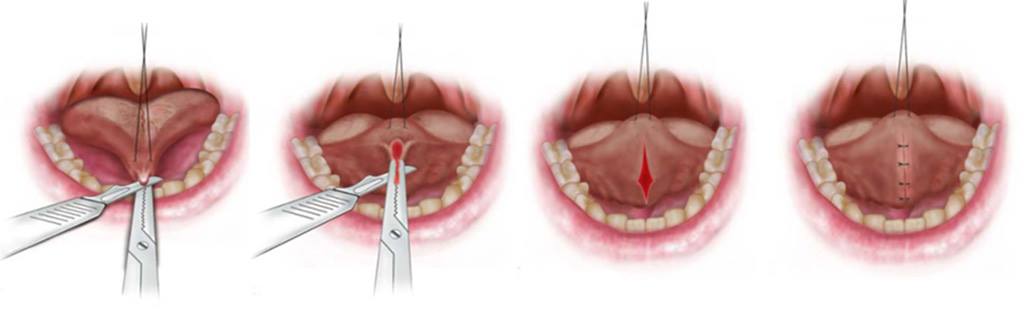
Once the patient is appropriately positioned, the doctor releases the restrictive tissue and controls any bleeding. The release itself is usually brief, but assessment, preparation and observation afterwards take additional time.
Pain relief is tailored to the patient's age and the extent of the procedure. Brief pain, distress or crying may occur. The procedure should not be assumed to be entirely painless. Afterwards, the doctor gives instructions on feeding and care.
Healing and aftercare following tongue-tie release
Monitor feeding and the treatment site after the procedure. Feeding does not improve immediately in every child; further lactation support or help with tongue function may be needed.
Do not stretch or reopen the wound on your own. Routine exercises that repeatedly reopen an infant's wound do not have well-established benefits. Any functional exercises should be appropriate for the child's age and needs and discussed with the doctor or speech and language therapist.
Possible complications and when to seek help
Possible complications include bleeding, pain, infection, scarring or recurrent restriction of tongue movement. Injury to nearby tissues is rare. The procedure does not guarantee that all feeding difficulties will resolve.
Persistent bleeding, refusal to feed or signs of dehydration require urgent medical advice. Seek emergency help immediately if your child has difficulty breathing.
Tongue-tie release in Gdańsk – appointments
When booking with Dr Agnieszka Kasprzyk-Tryk, give your child's age and explain that you need an assessment for frenotomy.
Book through our reception team: +48 58 719 10 25, kontakt@tartaczna2.pl.