Tartaczna 2


 back
back
CTG Monitoring Gdańsk – Cardiotocography (NST)
Cardiotocography
What is a CTG examination?
CTG, or cardiotocography, is a non-invasive method of monitoring the fetal heart rate and uterine activity. It is used primarily during the later stages of pregnancy when medically indicated and during labour.
Antenatal CTG, also known as a non-stress test (NST), allows the doctor or midwife to assess changes in the fetal heart rate, baseline variability and the baby's response to fetal movements. The result helps determine whether further observation or additional assessment may be required.
CTG does not directly measure the oxygen level in the baby's blood and should not be interpreted in isolation. The significance of the trace depends on factors including gestational age, fetal movements, the mother's health and the results of other examinations.
What does a CTG monitor record?
Cardiotocography records two parameters simultaneously:
- the fetal heart rate – usually recorded with an external ultrasound transducer using the Doppler effect;
- uterine activity – recorded using an external tocodynamometer.
The external uterine activity transducer primarily records the frequency and duration of contractions. It does not accurately measure their actual strength. Both recordings are displayed together, allowing changes in the fetal heart rate to be assessed in relation to fetal movements and uterine activity.
Types of CTG monitoring
Non-stress test (NST)
The non-stress test is the standard form of antenatal CTG monitoring. No medication is given to induce contractions. The assessment includes the baseline fetal heart rate, variability, accelerations and decelerations, and their relationship to fetal movements and any uterine contractions.
CTG monitoring during labour
During labour, CTG is used to monitor the fetal heart rate in relation to uterine contractions. Depending on the course of the pregnancy and labour, monitoring may be intermittent or continuous. The CTG trace is always interpreted together with the progress of labour and the overall clinical situation.
Contraction stress test
A contraction stress test, also known as an oxytocin challenge test or OCT, assesses the fetal heart rate response to induced uterine contractions. It is not routinely performed as an outpatient examination. If clinically indicated, it is carried out in hospital under close medical supervision, with facilities available for immediate further management.

What happens during a CTG non-stress test?
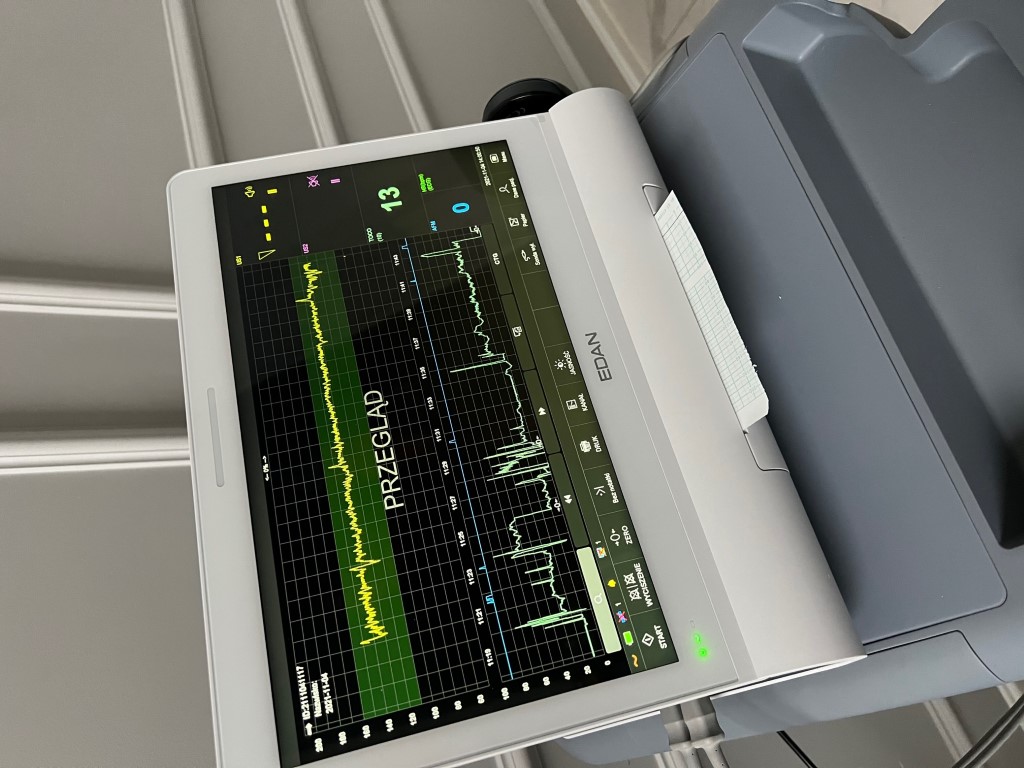
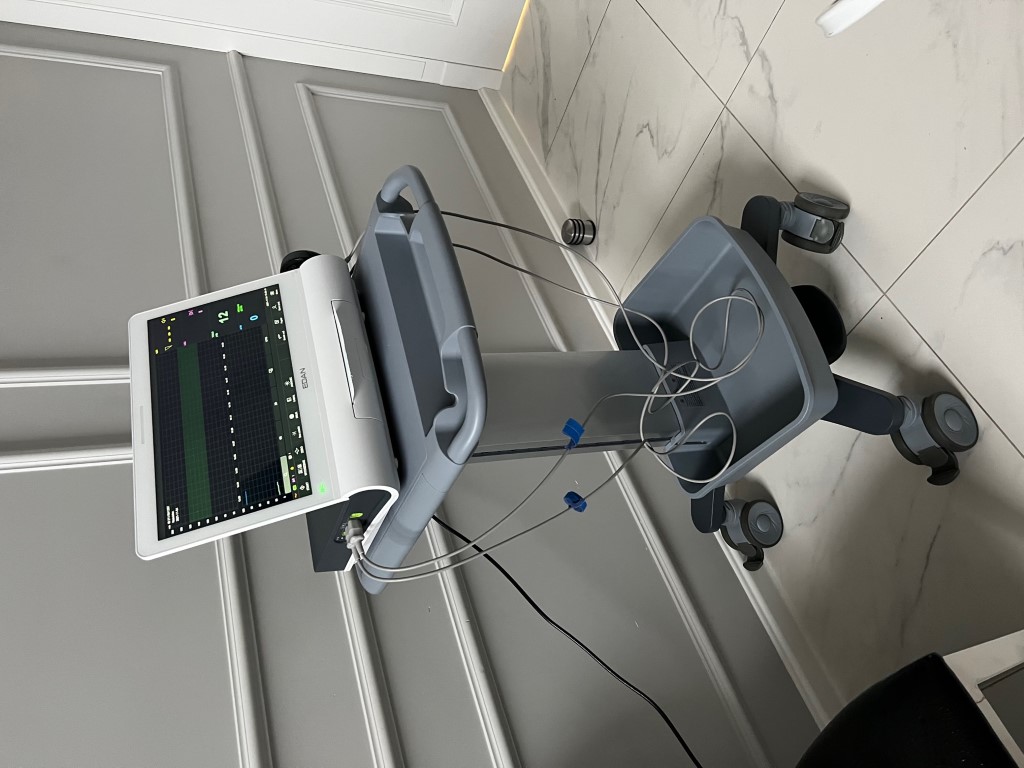
During CTG monitoring, two transducers are placed on the pregnant patient's abdomen and held in position with elastic belts. The ultrasound transducer is positioned where the fetal heart rate can be recorded most clearly. The second transducer, the tocodynamometer, is placed where it can record uterine activity.
The examination is performed in a comfortable position, usually semi-reclined or lying on one side. Prolonged lying flat on the back is generally avoided, particularly if it causes weakness, nausea or dizziness. The patient should inform the person performing the examination if she experiences any discomfort.
The CTG recording may be supported by computerised analysis, but the final interpretation must be made by an appropriately qualified doctor or midwife who takes the entire clinical situation into account.

A CTG examination usually takes approximately 20–30 minutes.
If the trace does not meet the criteria for reactivity, monitoring may be extended, usually to approximately 40 minutes and, when clinically appropriate, for longer. A non-reactive result does not necessarily indicate a problem. It may be related to a fetal sleep cycle, earlier gestational age, the effects of certain medicines or insufficient recording quality.
Depending on the result, the doctor may recommend continued observation, a repeat CTG, an ultrasound examination, Doppler assessment, a fetal biophysical profile or assessment in hospital.
When is CTG monitoring performed?
Antenatal CTG is most commonly performed during the third trimester when there are clinical indications to assess the baby's condition. Monitoring may be started earlier in selected circumstances, although results obtained before 32 weeks of pregnancy require cautious interpretation because the fetal autonomic nervous system is still developing.
In an uncomplicated pregnancy, CTG does not necessarily need to be performed at every routine appointment. The doctor determines when monitoring should begin and how frequently it should be repeated, taking into account gestational age, the course of the pregnancy and individual risk factors.
During labour, CTG provides information about changes in the fetal heart rate in relation to uterine contractions. The CTG trace alone does not determine whether a vaginal birth can continue or whether a Caesarean section is required. Decisions are made on the basis of the entire clinical picture.

Indications for CTG monitoring during pregnancy
CTG monitoring may be recommended when the course of pregnancy or the health of the mother or baby is associated with an increased risk of complications. The need for CTG and the frequency of monitoring are determined individually by the doctor.
Common situations in which CTG monitoring may be considered include:
- reduced or altered fetal movements;
- suspected fetal growth restriction (FGR);
- pregnancy continuing beyond the expected date of delivery;
- hypertension during pregnancy or pre-eclampsia;
- gestational diabetes or pre-existing diabetes, particularly when medication is required, glucose control is suboptimal or complications are present;
- intrahepatic cholestasis of pregnancy;
- oligohydramnios or polyhydramnios;
- selected multiple pregnancies;
- abnormal findings during an ultrasound or Doppler examination;
- selected maternal conditions associated with an increased risk of fetal compromise;
- a history of serious obstetric complications;
- Rhesus alloimmunisation with antibodies and a risk of fetal haemolytic disease;
- abdominal trauma, vaginal bleeding or other symptoms requiring urgent obstetric assessment.
Important: significantly reduced fetal movements, vaginal bleeding, suspected rupture of membranes, severe abdominal pain, regular contractions before term or a sudden deterioration in well-being require urgent assessment by a maternity unit. In these circumstances, you should not wait for a routine outpatient CTG appointment.
What is assessed on a CTG trace?
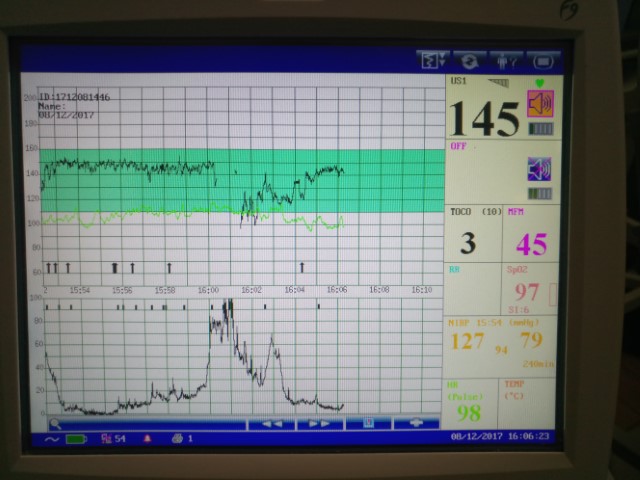
When interpreting a CTG trace, the following features are assessed:
- the baseline fetal heart rate;
- baseline fetal heart rate variability;
- accelerations, which are temporary increases in the fetal heart rate;
- decelerations, which are temporary decreases in the fetal heart rate;
- uterine activity;
- the relationship between fetal heart rate changes, fetal movements and uterine contractions.
The baseline fetal heart rate is usually between 110 and 160 beats per minute. A persistent rate above this range may be described as tachycardia, while a rate below it may be described as bradycardia. The significance of these findings depends on their duration, gestational age, the other features of the trace and the condition of both mother and baby.
Fetal tachycardia can have several causes, including maternal fever or infection, certain medicines, dehydration, increased fetal activity or a fetal arrhythmia. Bradycardia also requires assessment of the entire clinical situation and does not always indicate fetal hypoxia.
Baseline variability refers to the small fluctuations in the fetal heart rate around the baseline. Variability of approximately 5–25 beats per minute is generally considered normal. Temporarily reduced variability may occur during a fetal sleep cycle or following the administration of certain medicines. A prolonged or marked reduction in variability, particularly when accompanied by other abnormalities, requires prompt clinical assessment.
After 32 weeks of pregnancy, a reactive NST usually includes at least two accelerations of 15 beats per minute or more, each lasting at least 15 seconds, recorded within 20 minutes. Before 32 weeks, criteria adjusted for the earlier gestational age are used.
CTG can help identify patterns associated with an increased likelihood of fetal hypoxia or acidosis, but it does not confirm either condition directly. Both reassuring and abnormal results must be interpreted in the context of the overall clinical situation.
Are there any contraindications to CTG monitoring?
External non-stress CTG monitoring is non-invasive and has no standard contraindications. The transducers placed on the abdomen record signals without breaking the skin or administering medication.
Certain symptoms or pregnancy complications, such as suspected placental abruption, are not contraindications to fetal monitoring. They do, however, require urgent assessment in hospital rather than a routine outpatient CTG appointment.
How should I prepare for a CTG examination?
No special preparation is required for CTG monitoring. You may eat and drink normally and take your prescribed medicines before the appointment. There is no need to consume a special meal or sugary drink to stimulate fetal activity.
It is advisable to wear comfortable clothing that allows easy access to the abdomen and to use the toilet before monitoring begins. Please bring your pregnancy notes, the results of recent ultrasound examinations and any referral or recommendation issued by your doctor.
If you are seeking medical advice because your baby's movements have become significantly reduced, do not delay contacting a doctor or maternity unit and do not rely on food or drinks to stimulate the baby.
CTG monitoring in Gdańsk – how can I book an appointment?
At Tartaczna 2 Medical Centre, we perform CTG monitoring in Gdańsk using the EDAN F15 fetal and maternal monitor. The device records the fetal heart rate and uterine activity and provides computer-assisted analysis of the trace. The final result is interpreted by a healthcare professional.
CTG monitoring may form part of our pregnancy management and antenatal care. Tartaczna 2 Medical Centre is located at 2/1A Tartaczna Street in Gdańsk city centre.
You can book CTG monitoring through our contact page, by emailing kontakt@tartaczna2.pl or by calling +48 58 719 10 25.
CTG monitoring may also be performed during an appointment with one of our gynaecologists and obstetricians in Gdańsk, subject to prior confirmation of availability by telephone.