Tartaczna 2


 back
back
Hyperthyroidism in Pregnancy – Diagnosis and Treatment in Gdańsk
Low TSH, thyroid tests and endocrinology care during pregnancy
Hyperthyroidism in pregnancy means that the thyroid produces more hormone than the body needs. It requires assessment of the cause and appropriate monitoring, because management depends on the type and severity of the thyroid problem.
At Tartaczna 2 Medical Centre in Gdańsk, we offer endocrinology consultations, laboratory tests and obstetric care for women with an overactive thyroid during pregnancy.
What causes hyperthyroidism in pregnancy?
It is important to distinguish Graves' disease from temporary changes related to the pregnancy hormone hCG:
- Graves' disease – an autoimmune condition in which antibodies stimulate the thyroid to produce excess hormone. It is a common cause of persistent hyperthyroidism in women of reproductive age.
- Gestational transient thyrotoxicosis – caused by the stimulating effect of hCG on the thyroid. It occurs in early pregnancy and usually settles in the second trimester. It is more common in multiple pregnancies and in women with hyperemesis gravidarum, a severe form of pregnancy sickness.
- A toxic thyroid nodule or toxic multinodular goitre – less common causes in which overactive nodules produce excess thyroid hormone.
Severe vomiting does not automatically mean that you have Graves' disease. Assessing your symptoms and test results helps your doctor choose the appropriate care.
.jpg)
Symptoms of hyperthyroidism in pregnancy
Possible symptoms include:
- palpitations and a persistently fast heart rate, including at rest,
- feeling unusually hot and excessive sweating,
- hand tremor, anxiety, irritability and difficulty sleeping,
- weakness and reduced exercise tolerance,
- weight loss or a lack of expected weight gain.
Some of these symptoms can also occur during a healthy pregnancy. Symptoms alone are not enough to diagnose hyperthyroidism.
Does low TSH in pregnancy always mean an overactive thyroid?
Low TSH in the first trimester does not necessarily indicate a thyroid disorder. It may reflect the normal effects of hCG. The result needs to be assessed alongside thyroid hormone levels, symptoms and your stage of pregnancy.
The main tests include:
- TSH and free T4 – the initial blood tests used to assess thyroid function,
- free T3 or total T3 – in selected situations when further assessment is needed,
- TRAb – TSH receptor antibodies, which help diagnose Graves' disease and assess the risk of thyroid problems in the baby.
Your doctor uses reference ranges appropriate for pregnancy and the laboratory method. Low TSH with normal thyroid hormone levels, known as subclinical hyperthyroidism, usually requires monitoring and repeat blood tests rather than antithyroid medication.
Why are TRAb antibodies important during pregnancy?
TRAb antibodies can cross the placenta and affect the baby's thyroid. High levels may require closer monitoring of the baby. Tell your doctor if you have previously had Graves' disease, including treatment with surgery or radioactive iodine: antibodies may persist even when the mother's thyroid function is well controlled.

Thyroid ultrasound and additional tests during pregnancy
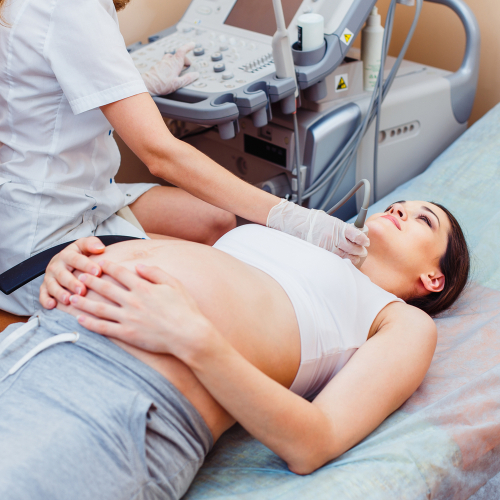
A thyroid ultrasound can be performed during pregnancy. It helps assess the gland's structure, enlargement and any nodules. Your doctor decides whether a biopsy is needed based on the features of a particular nodule; it is not a routine test for hyperthyroidism. Thyroid radionuclide scans are not performed during pregnancy.
How can hyperthyroidism affect pregnancy and the baby?
Poorly controlled overt hyperthyroidism, particularly due to Graves' disease, increases the risk of:
- miscarriage, gestational hypertension and pre-eclampsia,
- premature birth, restricted foetal growth and low birthweight,
- heart rhythm problems and, in severe cases, heart failure or thyroid storm in the mother.
Both maternal antibodies and antithyroid medicines can affect the baby's thyroid function. This is why coordination between the endocrinologist and the doctor managing your pregnancy is important. Mild, temporary thyrotoxicosis related to hCG does not usually carry the same risks as uncontrolled Graves' disease.
Treatment for hyperthyroidism in pregnancy
Gestational transient thyrotoxicosis
Antithyroid medication is usually unnecessary. Care involves monitoring thyroid function and, when vomiting is severe, treating the symptoms and replacing lost fluids. Severe symptoms or dehydration may require hospital treatment.
Graves' disease
Overt hyperthyroidism caused by Graves' disease requires prompt assessment by an endocrinologist and is usually treated with antithyroid medicines, which reduce thyroid hormone production. The medicine and dose are chosen according to the trimester, test results and the safety of both mother and baby.
The lowest effective dose is used. Excessive treatment can suppress the baby's thyroid function, so you should not increase the dose yourself simply because your TSH remains low.
If you are taking antithyroid medication and find out that you are pregnant, contact your doctor promptly. Your treatment may need to change. Do not stop or switch your medicine on your own because you are pregnant.
Radioactive iodine treatment is contraindicated during pregnancy. Thyroid surgery is considered only in exceptional circumstances when other management is insufficient or unsuitable; it requires hospital care.
How often should thyroid function be checked during treatment?
During antithyroid treatment, TSH and free T4 are usually checked every 2–4 weeks. Your doctor decides how often tests are needed, whether to measure TRAb and how the baby should be monitored. More frequent checks may be necessary after changing or stopping treatment.
Bring previous results and a list of medicines and supplements to your consultation. Tell your doctor your stage of pregnancy and how any thyroid condition has been treated in the past.
When is urgent medical help needed?
A high fever with a very fast heart rate, breathlessness, confusion or a marked deterioration in your condition requires immediate medical attention. Vomiting that prevents you from drinking and signs of dehydration also need urgent assessment.
While taking antithyroid medicines, a fever or severe sore throat may indicate a rare but serious adverse reaction. Do not take another dose until you have had an urgent medical assessment and a full blood count. Yellowing of the skin or eyes, or dark urine, also requires immediate contact with a doctor.
Hyperthyroidism after childbirth and while breastfeeding
Graves' disease can worsen or return after delivery, even if it was well controlled during pregnancy. Further blood tests and treatment adjustments may be needed. If maternal TRAb levels are high, the newborn may also need additional thyroid function assessment.
Appropriately selected antithyroid treatment usually allows breastfeeding. Your doctor will choose the medicine and dose. Temporary thyrotoxicosis related to hCG generally resolves during pregnancy; normalisation of your results should be confirmed according to your follow-up plan.
Hyperthyroidism and planning a pregnancy
If you have hyperthyroidism, aim to have your thyroid function well controlled before trying for a baby and discuss treatment with your endocrinologist. After radioactive iodine treatment, pregnancy should be postponed for at least 6 months, and the timing of trying to conceive should be agreed with your doctor.
Hyperthyroidism in pregnancy – endocrinology care in Gdańsk
At Tartaczna 2 Medical Centre, care for women with thyroid conditions during pregnancy is provided by:
- Dr Anna Florysiak – endocrinology consultations, assessment and treatment of hyperthyroidism during pregnancy,
- Dr Marek Korożan – gynaecological and obstetric care, including pregnancy care for women with thyroid conditions,
- Dr Ewa Kołyszko – thyroid ultrasound when indicated.
You can have the prescribed laboratory tests at our sample collection point without an appointment. Please confirm current opening hours and any preparation needed with reception.
Book an endocrinology consultation using the appointment calendar below or contact our reception team: +48 58 719 10 25, kontakt@tartaczna2.pl. When booking, please let us know that you are pregnant and need a thyroid assessment.

Thyroid ultrasound

Hashimoto’s Thyroiditis in Gdańsk – Diagnosis and Treatment