Tartaczna 2


 back
back
Labiaplasty in Gdansk – Labia Reduction Surgery
Labia reshaping with Fraxx radiofrequency
At Tartaczna 2 Medical Centre, we offer labiaplasty in Gdansk — surgery to reduce and reshape the labia minora, or inner labia. The procedure may be considered when their shape or size causes chafing, pulling or pain during everyday activities. Surgery is performed by Dr Marek Korożan and Dr Volha Khitrun using Fraxx radiofrequency technology.
Your care begins with a consultation to assess the cause of your symptoms, discuss your expectations and plan the extent of surgery. We perform the procedure under local anaesthesia on an outpatient basis.
- Procedure: reduction and reshaping of the labia minora.
- Method: Fraxx radiofrequency surgery.
- Doctors: Dr Marek Korożan and Dr Volha Khitrun.
- First step: a consultation to assess your suitability for surgery.
- Location: ul. Tartaczna 2/1a, Gdańsk, Poland.
Book a labiaplasty consultation or call +48 58 719 10 25.
What is labiaplasty?
Labiaplasty involves surgically removing part of the tissue and reshaping the labia minora. Surgery may involve both sides or just one. The aim is to achieve a shape suited to your anatomy while preserving tissue function and reducing discomfort caused by pulling or pressure.
The size, colour and shape of the labia naturally vary from person to person. Asymmetry and inner labia extending beyond the outer labia can be normal anatomical variations. Their appearance alone does not indicate a medical condition or a need for surgery.

When might labiaplasty be worth considering?
A consultation may be helpful if you experience symptoms that you associate with the shape or size of your labia, such as:
- repeated chafing or irritation when walking or wearing underwear,
- pulling, pressure or pinching during cycling, running or other activities,
- pain during intercourse caused by the labia folding or being pulled,
- discomfort following an injury or childbirth that requires assessment,
- persistent concerns about appearance or asymmetry that you would like to discuss with a doctor.
During the examination, your doctor will assess whether your symptoms are actually related to the anatomy of the labia. Dryness, itching, recurrent infections and vulval pain may require other treatment. These symptoms alone are not indications for labiaplasty.
Procedures performed solely for cosmetic reasons are considered in adults after genital development is complete. Symptoms in patients under 18 require a separate gynaecological assessment.

Fraxx radiofrequency labiaplasty — how does it work?
At Tartaczna 2 Medical Centre, we use Fraxx radiofrequency technology for labiaplasty. Radiofrequency energy delivered through a surgical electrode allows the doctor to cut tissue and coagulate small blood vessels, sealing them to control bleeding.
Radiofrequency is a surgical tool used during the operation. The doctor marks out the planned correction, removes the appropriate amount of tissue and closes the wound with stitches. The device settings and incision technique are chosen according to your anatomy and the surgical plan.
The outcome depends on the extent of surgery, the operator's experience, the blood supply to the tissues and the healing process. Radiofrequency does not eliminate the risk of complications or the need for recovery time.
Your labiaplasty consultation in Gdansk
A consultation with the doctor who will perform your surgery is required beforehand. During the appointment, Dr Marek Korożan or Dr Volha Khitrun will take your medical history, examine the area and discuss the available options.
Your consultation covers:
- the cause of your symptoms and whether surgery is likely to help,
- the extent of correction and a realistic, achievable outcome,
- the surgical technique, anaesthesia and wound closure,
- required tests, preparation and timing,
- potential complications, costs and follow-up appointments.
Tell your doctor about any chronic conditions, previous surgery in the area, allergies, medicines and supplements, and plans for pregnancy. The decision to have surgery should be informed and voluntary, with time to have your questions answered.
What happens during labiaplasty?
- Planning the correction. The doctor discusses the plan and marks the treatment area.
- Local anaesthesia. The doctor checks that the anaesthetic is effective before starting.
- Reshaping the tissue. A radiofrequency surgical instrument is used to make the planned incisions and control bleeding.
- Wound closure. The wound edges are joined with stitches selected for the technique and clinical situation.
- Postoperative assessment. Before going home, you receive instructions on wound care, medicines and follow-up.
The procedure usually takes around 60–120 minutes, depending on the extent of correction. Your doctor will give you a more specific estimate during your consultation.
Dissolvable stitches are most commonly used. How long they take to dissolve depends on the material; this does not necessarily indicate that healing is complete. If stitches requiring removal are used, your doctor will arrange an appointment.
Labiaplasty techniques — trim, wedge and modified approaches
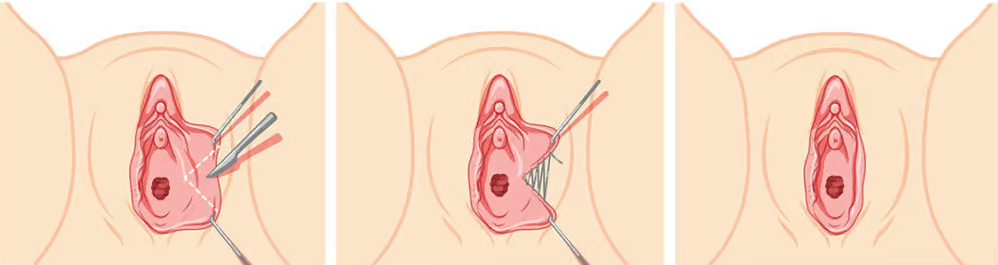
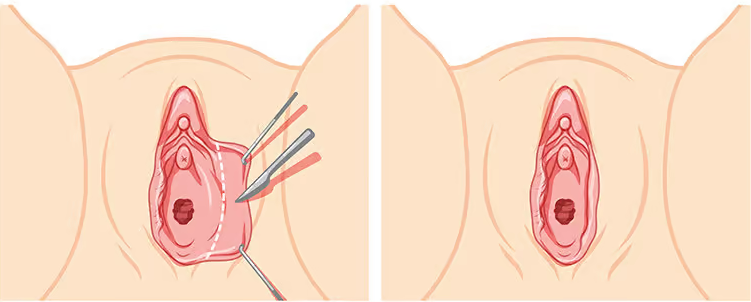
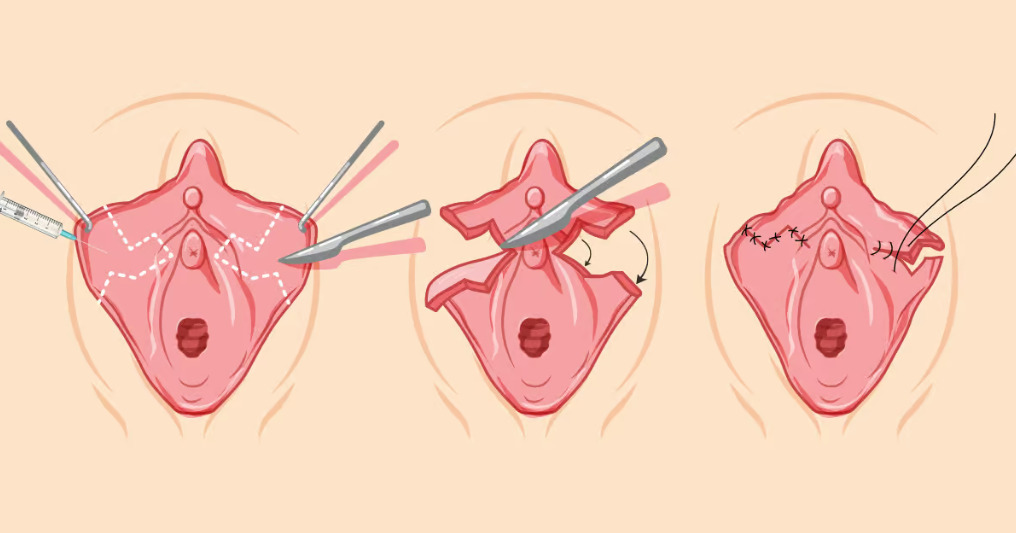
The surgical technique determines how the tissue is marked and removed. Fraxx radiofrequency can be used as a surgical instrument with an appropriately selected technique. The illustrations below show examples of different approaches; your operation is planned individually.
Wedge technique
This involves removing a wedge-shaped section of tissue and joining the remaining parts of the labium. It allows part of the natural edge to be preserved. The blood supply and tension at the wound edges need careful assessment.
Trim technique
This involves removing a strip of tissue along the edge of the labium and reshaping the remaining edge. The amount removed is planned to preserve sufficient tissue and its function.
Modified techniques, including Z-shaped incisions
In selected cases, the doctor may consider a modified incision pattern. The choice depends on the tissue anatomy, asymmetry, any existing scars and the aims of surgery.
How to prepare for labiaplasty
At your consultation, you will receive a list of required tests and information on how recent the results need to be. Depending on your health and the surgical plan, these may include a full blood count, APTT and INR clotting tests, urinalysis, and tests for hepatitis B, hepatitis C and HIV. Your doctor will also determine whether a vaginal swab or culture is needed.
- Do not stop anticoagulant or antiplatelet medicines on your own. Any changes must be agreed by the doctor performing your surgery in consultation with the doctor managing your treatment.
- Provide a list of all medicines, including painkillers, over-the-counter products and supplements.
- Report any fever, recent infection, skin changes or new intimate symptoms.
- Stop smoking well in advance — ideally at least 4 weeks before planned surgery — and avoid smoking while you heal.
- Bring loose underwear and clothing that will not press on the operated area.
- Plan a comfortable journey home and allow time to rest during the first few days.
Follow your individual instructions on hygiene, hair removal, eating and drinking before the procedure. Do not use antiseptics or vaginal medicines unless advised.
When might surgery need to be postponed?
Surgery may need to be postponed if you are pregnant, have an active infection in the area, a clotting disorder, a poorly controlled chronic condition or changes requiring further investigation. Your doctor will assess your suitability based on your history, examination and test results.
Is labiaplasty painful?
We perform labiaplasty under local anaesthesia. The anaesthetic injection may briefly sting or cause a pinprick sensation. You may feel touch or pressure during the procedure. If you feel pain, tell your doctor so the anaesthesia can be adjusted.
Once the anaesthetic wears off, you may experience soreness, swelling, bruising or discomfort when sitting or passing urine. Symptoms vary from person to person. Follow the pain relief instructions provided by your doctor.
Labiaplasty recovery and returning to normal activities
The operated area needs particular care during the first few days. Returning to work depends on how you feel and the nature of your job. You may need around a week off, although some patients need 1–2 weeks or longer.
Sexual intercourse, tampon use, strenuous exercise and activities that cause pressure or friction are usually restricted for around 4–6 weeks. Resume them only after the wound has healed and your doctor has confirmed that it is appropriate. Recovery may take longer if healing is slower.
Swelling gradually settles, but the final shape and appearance of the scars are assessed after several months, often around 3–6 months after surgery.
Aftercare following labiaplasty
- Gently keep the area clean and pat it dry without rubbing, following your doctor's instructions.
- Wear loose underwear and avoid prolonged pressure on the operated tissues.
- If cooling is recommended, apply a cool pack briefly through a protective layer. Do not place ice directly on the skin or wound.
- Use only the medicines and topical products recommended by your doctor.
- Avoid swimming pools, baths, saunas and hair removal that irritates the area until the wound has healed.
- Limit physical activity according to your recovery plan and attend your scheduled follow-up appointments.
Seek prompt medical advice if you develop heavy bleeding, rapidly increasing or one-sided swelling, worsening pain, fever, pus-like discharge, wound separation or difficulty passing urine. These symptoms need assessment even if they develop several days after surgery.
Labiaplasty results and possible complications
In appropriately selected patients, labiaplasty may reduce discomfort caused by pulling, folding and chafing of the labia and change their size and proportions. We discuss the expected outcome before surgery.
Possible complications include bleeding, a haematoma, infection, wound separation, painful scarring, altered sensation, persistent pain or pain during intercourse. Some asymmetry may remain, and further corrective surgery may be needed. Perfect symmetry, invisible scars and improved sexual satisfaction cannot be guaranteed.

Frequently asked questions about labiaplasty
Can I have labiaplasty before my first pregnancy?
Yes, following an individual assessment. Discuss your pregnancy plans during the consultation, as pregnancy and childbirth may affect the appearance of the tissues and the results of previous surgery.
When in my menstrual cycle should I schedule surgery?
The timing is agreed individually. Surgery is often scheduled after your period has finished so that menstrual bleeding does not make wound care and assessment more difficult during the first days of healing.
Are labiaplasty results permanent?
Removed tissue does not grow back in its original form. However, the appearance of the area may change with age, hormonal changes, pregnancy and childbirth. The result is assessed after healing is complete.
Can I return to cycling after labiaplasty?
Yes, once the wound has healed and you have been reviewed. Because cycling causes pressure and friction, it may require a longer break than gentle everyday activities.
Labiaplasty in Gdansk — cost and treatment plan
The cost of labiaplasty depends on the extent of correction and your individual surgical plan. During your consultation, you will receive information about the fee, required tests and follow-up arrangements.
You can find information about fees in our aesthetic gynaecology price list or contact reception on +48 58 719 10 25.
Who performs labiaplasty at Tartaczna 2 Medical Centre?
Fraxx radiofrequency labiaplasty at our centre is performed by Dr Marek Korożan and Dr Volha Khitrun. During your consultation, your chosen doctor will assess your suitability, discuss the available options and plan your postoperative care.
When booking through the platform, select Tartaczna 2 Medical Centre, ul. Tartaczna 2/1a, Gdańsk. You can also contact our reception team, call +48 58 719 10 25 or email kontakt@tartaczna2.pl.

Fractional CO2 Laser in Gynaecology – Gdańsk

Labia majora fillers in Gdańsk – hyaluronic acid