
Tartaczna 2


 back
back
Skin and Vulval Biopsy in Gdańsk
Tissue sampling for histopathological examination
A skin biopsy involves taking a small tissue sample for histopathological examination. It helps identify the cause of skin changes that cannot be reliably diagnosed through a clinical examination alone. At Tartaczna 2 Medical Centre in Gdańsk, we offer skin biopsies and vulval biopsies performed by a gynaecologist.
What can a skin biopsy show?
Examining a tissue sample under a microscope provides information about its structure and any abnormalities. Skin biopsies help diagnose certain inflammatory and autoimmune conditions, precancerous changes and skin cancers.
Your doctor may recommend a biopsy for:
- persistent skin changes of uncertain cause,
- a suspected inflammatory or autoimmune condition when a clinical examination is not enough to establish a diagnosis,
- lesions that do not respond to appropriate treatment,
- ulcers, areas of thickening or other changes that need to be assessed to rule out cancer.
The doctor decides whether a biopsy is needed after assessing your skin, symptoms and previous treatment. Choosing the right site for the sample is also important.
Types of skin biopsy – punch, incisional and shave
The sampling method depends on the suspected condition, the depth of the lesion and its location.
- Punch biopsy – a small, circular instrument is used to remove a cylindrical tissue sample containing the relevant layers of skin.
- Incisional biopsy – a scalpel is used to remove part of a lesion. This may be suitable when a sample from a larger lesion is needed to establish a diagnosis.
- Shave biopsy – a more superficial tissue sample is taken; this method is appropriate only for certain lesions.
Removing an entire lesion for examination is called an excisional biopsy, which we describe on a separate page. If melanoma is suspected, the sampling method must allow reliable assessment of the lesion, including its depth; complete excision is usually preferred when feasible.
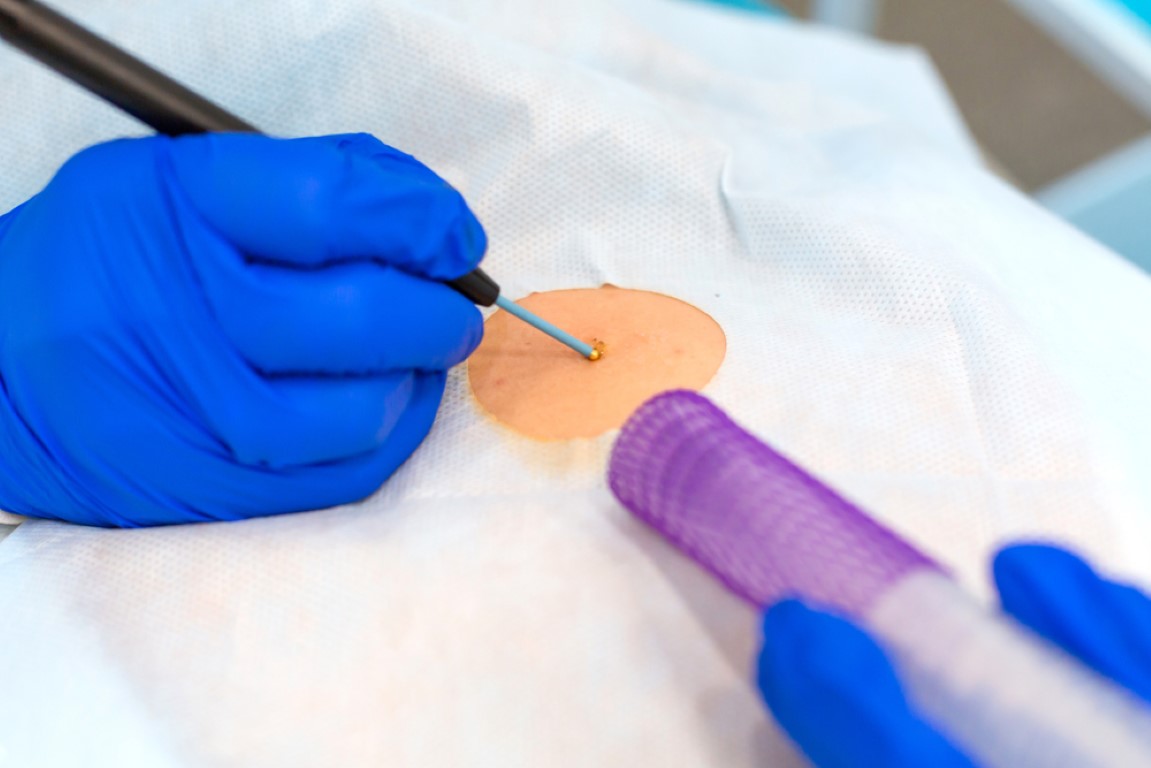
Vulval biopsy – when is a tissue sample needed?
A vulval biopsy involves taking a small sample of skin or mucosal tissue from a selected area of the external genitalia. It helps diagnose conditions that may cause itching, burning, pain or changes in the appearance of the tissue.
Reasons for a biopsy may include:
- suspected lichen sclerosus or lichen planus when the diagnosis is uncertain or the condition has atypical features,
- persistent erosions, ulcers, fissures, white patches or areas of thickening,
- pigmented lesions or other changes that appear concerning on examination,
- a lack of improvement despite treatment,
- suspected vulval precancerous changes, known as vulval intraepithelial neoplasia (VIN), or cancer.
Itching or burning alone does not necessarily mean a biopsy is needed. A gynaecological examination and assessment of possible causes come first. Lichen sclerosus can often be diagnosed clinically; a biopsy is particularly useful when the diagnosis is uncertain or a suspicious lesion is present.
At our centre, vulval biopsies are performed by gynaecologists Dr Marek Korożan and Dr Volha Khitrun.
How to prepare for a skin or vulval biopsy
Bring any previous test results and a list of your medicines and topical treatments to the consultation. Tell your doctor about anticoagulant or antiplatelet medicines, bleeding disorders, allergies to local anaesthetics and any previous problems with wound healing.
Do not stop taking medicines on your own. Your doctor will decide whether additional tests or changes to treatments applied to the planned biopsy site are needed. Previous topical treatment may affect the histopathology findings.
What happens during a biopsy, and does it hurt?
The procedure is usually performed in a consulting or treatment room under local anaesthesia. The anaesthetic injection may cause brief stinging or burning. Once it takes effect, you may still feel touch or pressure; tell the doctor immediately if you feel pain while the sample is being taken.
The doctor takes the tissue sample, controls any bleeding and places stitches if needed. Sometimes samples from more than one site are required to establish a diagnosis. After the procedure, you receive wound care instructions and details of any follow-up appointment.
Healing and aftercare following a biopsy
Mild tenderness, swelling or slight bleeding may occur after the sample is taken. Possible complications include bleeding, infection, delayed wound healing and scarring.
- Care for the biopsy site according to your doctor's instructions; how the wound is protected depends on its location.
- Avoid injury, rubbing and excessive stretching of the skin around the biopsy site.
- Avoid swimming pools and prolonged soaking of the biopsy site until the wound has healed.
- Attend your scheduled follow-up appointment and have any stitches removed as advised. After a skin biopsy, stitches are often removed after approximately 7–14 days, but your doctor will set the timing.
After a vulval biopsy, wash the area gently, pat it dry carefully and wear loose underwear. Avoid sexual intercourse and activities that cause pressure or friction, such as cycling, until the biopsy site has healed and discomfort has settled, following the advice you have been given. If stitches are used, your doctor will explain whether they dissolve or need to be removed.
Contact your doctor if you develop worsening pain, increasing redness, pus, a fever or persistent bleeding.
Skin and vulval biopsy results – histopathological examination
A pathologist examines the tissue sample. The findings may confirm a particular condition or help narrow down the possible diagnoses. They should be interpreted alongside the appearance of the lesions, your symptoms and treatment history. The information available depends on the condition and the sample obtained; additional tests or another biopsy may sometimes be needed.
The waiting time for histopathology results at our centre is approximately 30 days. Additional staining or a specialist review of the tissue slides may extend this timeframe.
Discuss the results with the doctor managing your assessment. The findings help determine treatment, further monitoring or whether the lesion needs to be removed. If an oncology consultation is indicated, you can see Dr Magdalena Korożan at our centre.
Skin and vulval biopsy in Gdańsk – doctors and appointments
Skin biopsies
Skin biopsies are performed by:
- Dr Natalia Spychalska – surgical oncology,
- Dr Kamil Drucis – surgical oncology,
- Dr Sara Strugała – dermatology.
Vulval biopsies performed by a gynaecologist
Vulval biopsies are performed by:
Use the calendars below to book a skin biopsy consultation with a surgeon or dermatologist. To arrange a vulval biopsy with a gynaecologist, contact our reception team: +48 58 719 10 25, kontakt@tartaczna2.pl.